Almost all calicos are female
Roughly 99.9% of calico cats are female, since the genes for orange and black fur sit on the X chromosome. Male calicos are reported at around 1 in 3,000.
Source: General info
We are named after the calico, so of course we have a page for them. Facts, cat language and kind ways to help cats.
General information only. It is not veterinary advice. Ask a licensed vet about your cat.
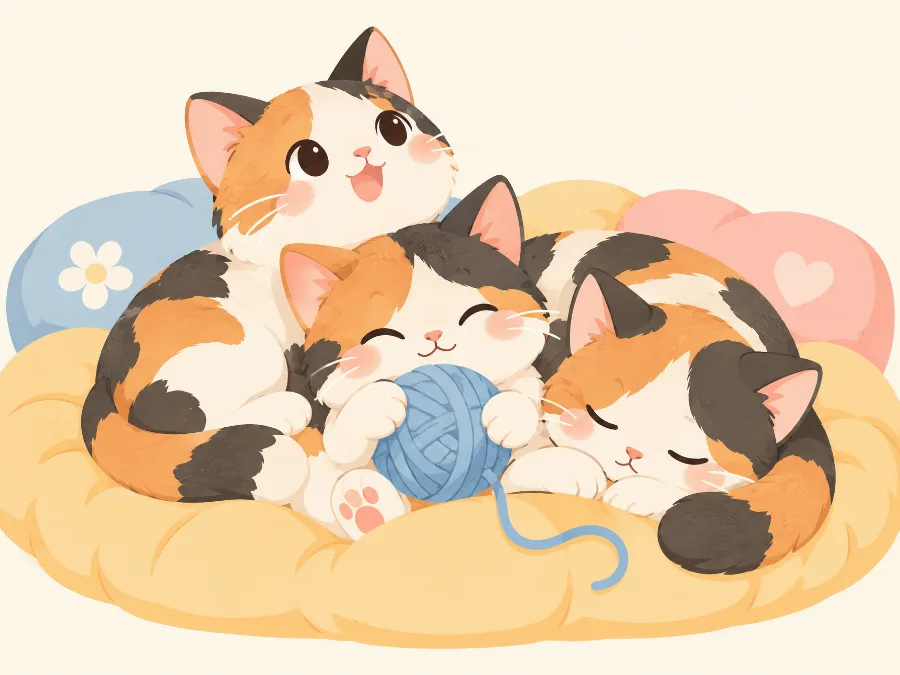
Patches, genetics and good-luck legends.
Roughly 99.9% of calico cats are female, since the genes for orange and black fur sit on the X chromosome. Male calicos are reported at around 1 in 3,000.
Source: General info
A female cat has two X chromosomes and can carry one orange and one black coat gene. Combined with the white-spotting gene, that gives the calico pattern.
Source: General info
A male calico usually has an extra X chromosome (XXY), which is why they are rare, roughly 1 in 3,000 calicos by common estimates. They are often sterile.
Source: General info
Which X chromosome is active in each patch of skin is random, so every calico gets a one-of-a-kind pattern.
Source: General info
Many breeds and mixed-breed cats can be calico. It describes the coat color pattern.
Source: General info
In Japan, the beckoning-cat charm (Maneki-neko) is often shown as a calico, called mi-ke, and is believed to bring good luck.
Source: Japanese folklore
In US folklore, calicos are sometimes called money cats because people say they bring good fortune.
Source: Folklore
Maryland adopted the calico as its official state cat in 1988.
Source: General info
Adult cats commonly sleep around 12 to 16 hours a day.
Source: General info
Each cat ear has about 32 muscles, which helps cats swivel their ears toward sounds.
Source: General info
Whiskers help cats sense nearby objects and judge whether they fit through gaps.
Source: General info
Like a fingerprint, every cat's nose pad has its own pattern of ridges.
Source: General info
Cats often purr when relaxed, but some also purr when stressed or hurt. Look at the whole body, not just the sound.
Source: General info
What your cat might be telling you.
A tail held high, often with a small curl at the tip, is usually a friendly hello.
Source: General info
A bristled, puffy tail usually means the cat is startled or frightened. Give it space.
Source: General info
A slow blink is often called a cat kiss. Slowly blink back to say you are friendly.
Source: General info
Pushing paws in and out on a soft spot is comfort behavior that starts in kittenhood.
Source: General info
Short chirps or trills are often a greeting or a cat asking you to follow.
Source: General info
Ears turned sideways or flat back usually mean the cat feels nervous or annoyed.
Source: General info
The simple things cats need.
Cats need fresh water, a complete and balanced diet, a clean litter box, a safe place to rest, scratching posts and play every day.
Source: General info, not veterinary advice
Regular check-ups and vaccinations help keep cats healthy. Ask a licensed veterinarian about your cat.
Source: General info, not veterinary advice
Helping cats who live outdoors.
Trap-Neuter-Return (TNR) is a humane way to care for community cats: they are trapped, spayed or neutered, vaccinated and returned. Contact a local rescue group or veterinarian to learn how it works in your area.
Source: General info
Every cat deserves a cozy spot.
Local shelters and rescues have cats waiting for homes. We are not an adoption agency, but we love to help spread the word.
Source: General info
Tap the cat at the bottom of the page for more.

A small part of the studio's work goes to cat food. See how it works and where it goes.
Visit Calicocat Feeds